


How to Choose a Motorcycle Dash Cam: A Rider’s 5-Step Guide
For the modern motorcyclist, the open road is a place of freedom, but it’s also shared with unpredictable drivers, road hazards, and potential disputes. While your helmet protects your head, a motorcycle dash cam is the ultimate tool for protecting your rights and your wallet. It’s an unbiased witness that captures everything from near-misses to the breathtaking scenery of your favorite ride.
But with so many options on the market, from dedicated systems to action cameras, how do you choose the right one? You can’t just pick the first one you see. The wrong choice could mean a useless device when you need it most. This guide cuts through the confusion with a simple, 5-step process to find the perfect motorcycle dash cam for your needs and budget.
Step 1: Define Your Primary Need – Evidence or Adventure?
Before looking at specs, ask yourself the core question: Why do I want a camera? The answer will steer you in the right direction.
-
For Primary Evidence & Security: If your main goal is to have a reliable witness in case of an accident, a dedicated motorcycle dash cam is your best bet. These systems are designed for this purpose. They often feature:
- Loop Recording: Automatically overwrites old footage when the memory card is full, so you never have to manually delete files.
- G-Sensor (Impact Detection): Locks and saves footage automatically upon a collision, preventing it from being erased.
- Seamless Power: Hardwiring kits allow for parking mode, which can record incidents even when your bike is parked.
-
For Capturing Adventures & Vlogs: If you’re more focused on creating high-quality videos of your rides for YouTube or personal memories, an action camera like a GoPro or Insta360 might be a better fit. They prioritize cinematic video quality, stabilization, and versatile mounting. However, they lack automatic loop recording, meaning you must manually manage storage.
-
The Hybrid Approach: Many riders want the best of both worlds. Thankfully, some action cameras are now incorporating dash cam features, making them a versatile choice for the rider who wants evidence on the daily commute and stunning footage from weekend canyon runs.
Step 2: Assess the Core Features – Video Quality is King, But Not Alone
Once you know your “why,” it’s time to look at the “what.” Don’t get lost in a sea of technical jargon. Focus on these three essentials:
-
Video Resolution and Frame Rate: For clear evidence, you need to be able to read license plates. 1080p (Full HD) at 60fps is the modern baseline. This provides a sharp image and smooth motion. 4K is excellent for detail but creates larger files and drains the battery faster. A higher frame rate (60fps vs. 30fps) results in smoother video, which is crucial for capturing fast-moving details.
-
Image Stabilization: This is non-negotiable for a motorcycle dash cam. Engine vibrations and road imperfections will turn an unstabilized video into a shaky, unwatchable mess. Look for cameras with Electronic Image Stabilization (EIS) or, even better, gyro-based stabilization. Good stabilization ensures your footage is smooth and usable, whether for evidence or entertainment.
-
Build Quality & Weatherproofing: Your camera will be exposed to the elements. It must have a high IP (Ingress Protection) rating. Look for a minimum of IP67 (protected from dust and immersion in water up to 1m for 30 minutes), but IP68 is the gold standard for peace of mind during heavy rain.
Step 3: Consider the Power Source and Installation
How will you power your camera? This is a critical, often overlooked, step.
- Battery vs. Capacitor: Avoid cameras that rely solely on lithium-ion batteries for continuous power. Batteries degrade in extreme heat (like on a sun-baked bike) and can swell or fail. Capacitors are superior for dash cams. They charge quickly and power the camera safely through engine starts and shutdowns, making them more reliable in temperature extremes.
- Wiring: Most motorcycle dash cams are powered via your bike’s battery. Consider if you’re comfortable installing a wiring harness yourself or if you’ll need professional help. Some cameras can also be powered via a USB power bank for shorter rides.
Step 4: Plan Your Mounting Strategy
Where and how you mount the camera affects both the field of view and security.
- Handlebar Mounts: Common and easy to install, but can transmit more vibration.
- Chin Bar Mounts (on Helmet): Offers a perspective that follows your head movement, which is great for capturing exactly what you’re looking at. Check local laws, as some regions have restrictions on helmet attachments.
- Frame or Fork Mounts: Provide a more stable, vibration-damped platform, often resulting in smoother video.
Ensure your chosen camera has a secure, quick-release mount system that works with your preferred location.
Step 5: Don’t Forget the Memory Card
Your motorcycle dash cam is useless without a reliable memory card. Standard cheap SD cards are not designed for the constant read/write cycles of dash cams and will fail quickly.
- High Endurance Card: Always purchase a High Endurance or Dashboard Camera branded microSD card. They are built to withstand temperature fluctuations and continuous recording.
- Capacity: A 64GB or 128GB card is recommended. This gives you several hours of recording before the loop recording begins.
Ready to Choose? A Versatile Hybrid Option to Consider
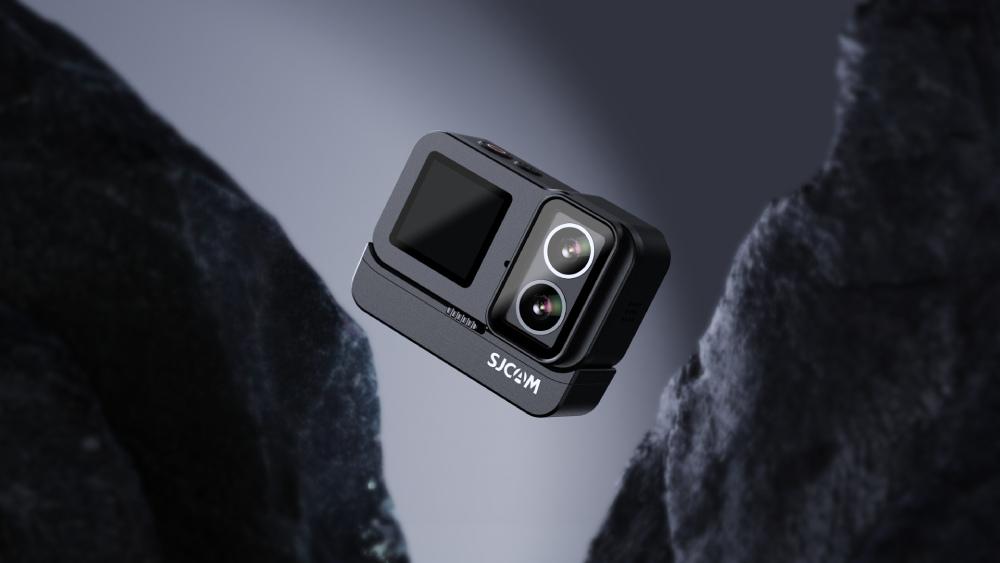
Following these five steps will empower you to make a smart, informed decision. If your search leads you towards a powerful, feature-rich hybrid that excels as both a reliable witness and a capable adventure recorder, the SJCAM SJ20 Action Camera is an excellent contender.
The SJCAM SJ20 is designed to meet the demands of motorcyclists. It captures crystal-clear 4K/30fps video and buttery-smooth 1080p/60fps footage, ensuring you can read vital details like license plates. Its advanced 6-axis gyro stabilization is specifically engineered to counteract motorcycle vibrations, delivering exceptionally stable video. With an IP68 waterproof rating (and an included waterproof case for deeper submersion), it laughs in the face of rain and road spray.
Crucially for dash cam use, the SJ20 features a Car DVR (Dash Cam) Mode. When enabled, it automatically starts recording when powered on and can loop record, just like a dedicated system. This makes it a truly versatile choice. Use it for your daily commute with loop recording for security, then easily switch to standard mode to capture high-quality footage on your next weekend tour.
By investing a little time with this guide, you’re not just buying a camera—you’re investing in peace of mind for every ride.

 English
 Arabic
 French
 Spanish
 Portuguese
 Deutsch
 Turkish
 Dutch
Dutch
 Italiano
 Russian
 Romaian
 Greek
Greek