


Cryptocurrency Exchange Development with Advanced Order Types for Professional Traders
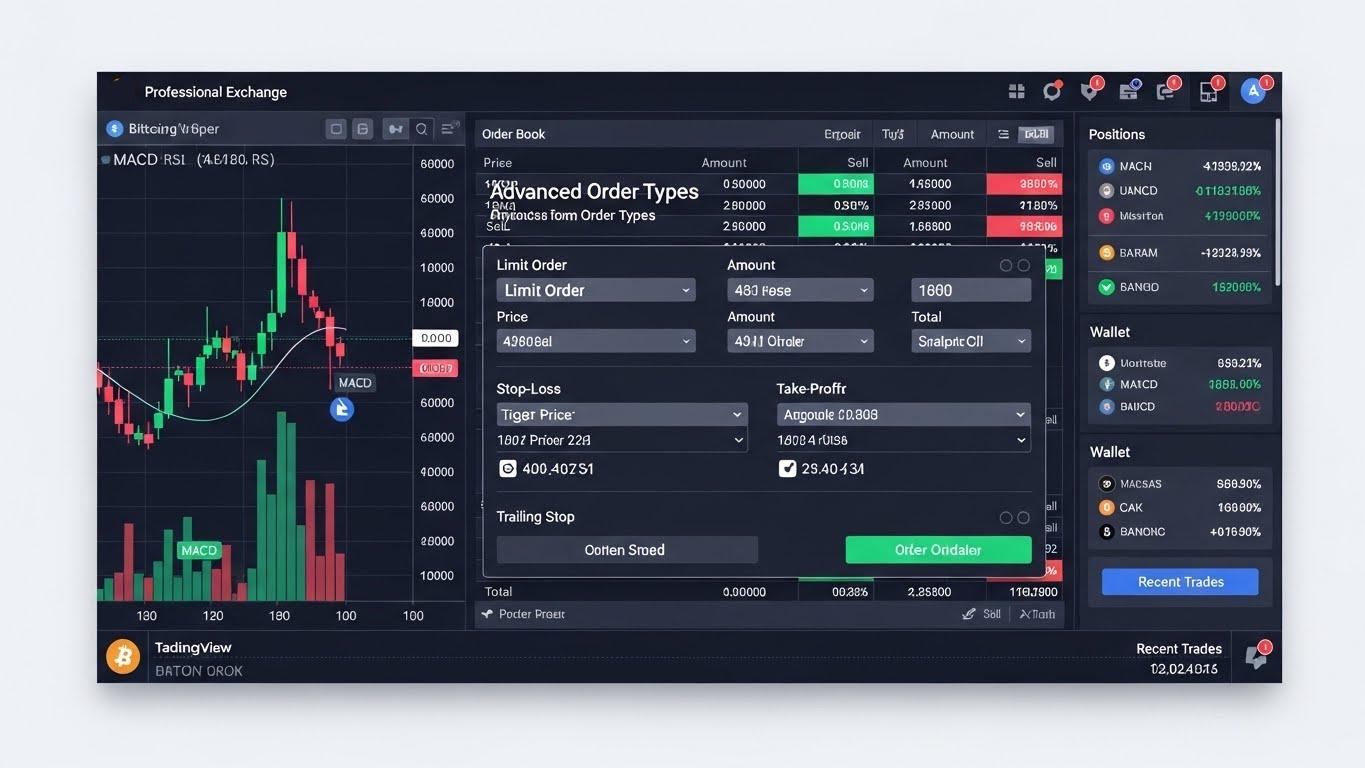
Why Advanced Order Types Define Modern Crypto Exchanges
Cryptocurrency trading has evolved far beyond basic buy-and-sell transactions. As digital asset markets mature, professional traders now demand the same or higher levels of sophistication found in traditional financial markets. Speed, precision, risk management, and execution control are no longer optional features; they are fundamental expectations.
Cryptocurrency exchange development plays a critical role in enabling these capabilities. At the center of this evolution lies support for advanced order types. These order mechanisms allow traders to define precise execution conditions, automate strategies, minimize risk, and respond instantly to market movements.
-
Professional traders rely on advanced order logic to manage volatility
-
Institutional participants require predictable execution behavior
-
Algorithmic strategies depend on programmable order conditions
-
High-volume traders need flexibility to protect margins
This blog explores how cryptocurrency exchange development enables advanced order types, why they are essential for professional traders, and how they contribute to liquidity, revenue, and platform credibility.
Understanding the Needs of Professional Crypto Traders
Professional traders differ significantly from casual or first-time users. Their expectations influence every layer of exchange design.
Who Are Professional Traders?
Professional traders typically include:
-
High-frequency and algorithmic traders
-
Institutional investors and funds
-
Market makers and liquidity providers
-
Experienced retail traders with advanced strategies
What Professional Traders Expect from an Exchange
Their requirements extend well beyond basic trading functionality.
-
Millisecond-level execution speed
-
Predictable order behavior
-
Advanced risk management tools
-
Deep liquidity and tight spreads
-
Minimal slippage during volatile conditions
Cryptocurrency exchange development must account for these needs from the outset, especially when designing order management systems.
The Role of Order Types in Trading Strategy Execution
Order types determine how and when trades are executed. For professional traders, these mechanisms are central to strategy design.
Why Basic Order Types Are Not Enough
Simple market and limit orders lack the flexibility required in fast-moving crypto markets.
-
Market orders expose traders to slippage
-
Limit orders may never execute during volatility
-
Manual execution increases human error
-
Reactive trading limits profitability
Advanced order types solve these limitations by introducing automation, conditions, and precision.
Core Architecture Required for Advanced Order Types
Before implementing complex order logic, exchanges must be built on robust technical foundations.
Architectural Requirements
Advanced order handling requires:
-
High-performance matching engines
-
Event-driven order processing
-
Low-latency system communication
-
Real-time market data streaming
Why Architecture Matters for Order Execution
Without strong architecture:
-
Conditional orders trigger late
-
Stop orders execute inaccurately
-
Complex order chains fail under load
-
Trader confidence erodes
Cryptocurrency exchange development must prioritize deterministic execution behavior to support professional trading.
Market Orders and Their Role in Professional Trading
While simple, market orders remain relevant in advanced trading environments.
Market Order Characteristics
-
Immediate execution at best available price
-
Guaranteed fill but not guaranteed price
-
Used during high-liquidity conditions
Risks and Mitigation Through Development
Feature-rich development reduces market order risks by:
-
Implementing slippage controls
-
Displaying real-time depth-of-market data
-
Enabling market protection limits
Even basic order types benefit from sophisticated backend systems.
Limit Orders as the Foundation of Advanced Trading
Limit orders are the building blocks for more complex strategies.
Why Limit Orders Matter to Professionals
-
Precise price control
-
Used for liquidity provision
-
Essential for market making
Development Enhancements for Limit Orders
Cryptocurrency exchange development improves limit order functionality through:
-
Partial fill handling
-
Time-in-force options
-
Queue position optimization
These enhancements make limit orders more predictable and effective.
Stop-Loss Orders for Risk Management
Risk management is a defining priority for professional traders.
Purpose of Stop-Loss Orders
-
Automatically limit downside exposure
-
Protect positions during volatility
-
Reduce emotional trading decisions
Development Considerations for Stop Orders
To ensure reliability:
-
Stop triggers must use real-time price feeds
-
Execution logic must avoid false triggers
-
Latency must be minimized
Poorly implemented stop-loss systems can amplify losses rather than prevent them.
Take-Profit Orders for Automated Gains
Take-profit orders allow traders to lock in gains without constant monitoring.
How Take-Profit Orders Work
-
Automatically close positions at predefined profit levels
-
Often paired with stop-loss orders
Benefits for Professional Traders
-
Enables disciplined trading
-
Supports multi-position strategies
-
Reduces manual execution overhead
Cryptocurrency exchange development must support accurate trigger conditions to ensure trust.
Stop-Limit Orders for Precision Control
Stop-limit orders combine elements of stop and limit orders.
Why Professionals Use Stop-Limit Orders
-
Greater control over execution price
-
Reduced slippage risk
-
Strategic entry and exit planning
Technical Challenges in Implementation
Development teams must handle:
-
Dual trigger conditions
-
Partial fills and cancellations
-
Market gap scenarios
Robust logic is essential to avoid failed executions.
OCO (One-Cancels-the-Other) Orders
OCO orders are essential for automated risk and profit management.
How OCO Orders Function
-
Two linked orders placed simultaneously
-
Execution of one cancels the other
Use Cases for Professional Traders
-
Simultaneous stop-loss and take-profit
-
Breakout trading strategies
-
Volatility-based position management
Cryptocurrency exchange development must ensure atomic execution to prevent double fills.
Trailing Stop Orders for Dynamic Markets
Trailing stops adjust automatically as prices move.
Why Trailing Stops Matter in Crypto Markets
-
Protect gains during rapid price movements
-
Adapt to volatility without manual updates
Development Requirements
-
Continuous price tracking
-
Real-time adjustment logic
-
Accurate execution under load
Trailing stops require advanced backend processing to function reliably.
Iceberg Orders for Large-Volume Traders
Large trades can disrupt markets if exposed.
Purpose of Iceberg Orders
-
Hide true order size
-
Reduce market impact
-
Preserve price stability
Development Complexity
Implementing iceberg orders requires:
-
Order slicing logic
-
Hidden and visible quantity tracking
-
Accurate order book representation
These features are critical for institutional participation.
Fill-or-Kill (FOK) and Immediate-or-Cancel (IOC) Orders
These orders give traders strict execution conditions.
FOK Orders
-
Must execute entirely or cancel
-
Used for precise liquidity targeting
IOC Orders
-
Execute immediately, cancel unfilled portion
-
Useful during fast markets
Development Considerations
-
Atomic execution handling
-
Clear feedback to users
-
Real-time liquidity evaluation
Such order types demand high-speed matching engines.
Post-Only Orders for Market Makers
Post-only orders help liquidity providers avoid taker fees.
Why Post-Only Orders Matter
-
Ensure orders add liquidity
-
Protect fee strategies
-
Support market-making models
Technical Implementation
-
Pre-execution order book checks
-
Automatic cancellation if crossing occurs
Accurate handling is essential for professional traders.
Conditional Orders and Strategy Automation
Advanced traders rely on conditions beyond price triggers.
Types of Conditional Orders
-
Volume-based triggers
-
Time-based execution
-
Indicator-driven orders
Development Requirements
-
Real-time analytics integration
-
Rule evaluation engines
-
Event-based execution logic
These capabilities enable sophisticated algorithmic trading.
API Support for Advanced Order Types
Professional traders often use automated systems.
Importance of API-Driven Trading
-
High-speed execution
-
Strategy automation
-
Integration with trading bots
Development Features Needed
-
Low-latency APIs
-
WebSocket data feeds
-
Secure authentication
Advanced order types must be fully supported via APIs.
Risk Management Controls at the Platform Level
Advanced orders must operate within risk boundaries.
Platform-Level Risk Features
-
Position limits
-
Margin controls
-
Circuit breakers
Why This Matters
-
Prevents cascading failures
-
Protects liquidity
-
Ensures fair trading
Cryptocurrency exchange development integrates risk logic with order execution.
Performance Optimization for Advanced Orders
Complex order logic increases system load.
Performance Challenges
-
High-frequency triggers
-
Large concurrent order volumes
-
Market volatility spikes
Optimization Strategies
-
In-memory order processing
-
Parallel execution pipelines
-
Load-balanced matching engines
Performance directly impacts trader confidence.
Security Considerations for Order Management
Advanced orders increase attack surfaces.
Security Risks
-
Order manipulation
-
Trigger exploitation
-
API abuse
Security Features Required
-
Rate limiting
-
Behavior monitoring
-
Audit trails
Security protects both traders and platform revenue.
Compliance and Transparency in Order Execution
Professional traders demand transparency.
Compliance-Oriented Features
-
Execution logs
-
Order history tracking
-
Price source disclosure
These features support regulatory and institutional adoption.
Revenue Impact of Advanced Order Types
Advanced traders generate higher revenue.
How Advanced Orders Increase Profitability
-
Higher trading volumes
-
Institutional participation
-
Increased liquidity
Cryptocurrency exchange development that supports advanced orders directly boosts monetization potential.
Advanced Order Types as a Competitive Necessity
Advanced order types are no longer optional features reserved for elite platforms. They are essential components of modern cryptocurrency exchange development aimed at professional traders.
-
They enable precise strategy execution
-
They improve risk management
-
They attract institutional liquidity
-
They increase platform revenue
Exchanges that invest in feature-rich order management systems position themselves as credible, scalable, and professional trading environments capable of competing in global markets.

 English
 Arabic
 French
 Spanish
 Portuguese
 Deutsch
 Turkish
 Dutch
Dutch
 Italiano
 Russian
 Romaian
 Portuguese (Brazil)