


Placement Challenges for CCTV in Mixed-Use Properties
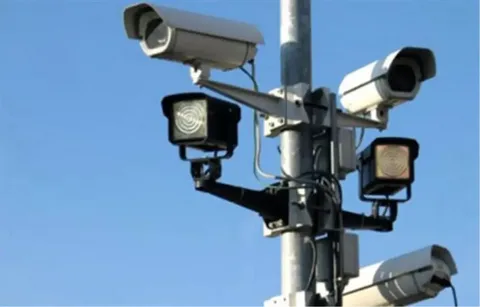
Mixed use developments—those that combine residential apartments with ground floor retail or office space—are becoming increasingly popular in growing cities like Warner Robins. While these properties offer convenience, they present a 'security nightmare' for planners. You must protect high traffic retail areas while simultaneously respecting the privacy and peace of many residents. This dual requirement creates significant placement challenges that require a highly strategic approach to camera layout. Balancing these competing needs is where professional CCTV Installation Services prove their value.
Separating Public and Private Flow
The first challenge in a mixed use property is 'flow management.' You have customers, delivery drivers, and residents all moving through the same physical space. A camera placement that is perfect for monitoring a retail storefront might inadvertently capture the entrance to a resident s private balcony. This is a major legal and ethical 'no-go' in 2026.
Technicians must use 'Privacy Masking' software to digitally black out windows or private doors within the camera s field of view. Physically, cameras should be angled to focus on common 'choke points'—such as elevators, lobby entrances, and mailrooms—rather than long hallways where apartment doors are visible. This ensures that the system provides security for the building without making the residents feel like they are living in a fishbowl.
Monitoring Shared Parking and Loading Zones
Parking lots in mixed use properties are high risk zones for vehicle break-ins and 'fender benders.' These areas are often used by both residents who park overnight and shoppers who are there for only an hour. The placement challenge here is 'depth of field.' You need to see the entire lot for general awareness, but you also need high detail at the entrance to capture license plates.
This often requires a 'two camera' solution for every entrance. One camera is mounted low to capture the 'mugshot' of the driver and the plate, while another is mounted high on a light pole to provide an overview of the entire lot. This prevents 'blind spots' where a person could hide between parked cars after entering the property. In 2026, AI can also be used here to distinguish between resident vehicles and 'unauthorized' vehicles that have been loitering for too long.
Managing Light Contrast in Lobbies and Breezeways
Mixed use buildings often feature large glass lobbies or open air breezeways that transition from bright sunlight to deep interior shadows. This is a 'nightmare' for image sensors. A camera pointed toward the glass door from a dark lobby will often see only a blinding white light outside and a black silhouette of anyone entering.
The placement solution involves 'side loading' the cameras. Instead of pointing the camera directly at the door, it is placed at a forty five degree angle. This allows the camera to catch the light from the side, which provides much better detail on the person s face. Using cameras with extreme Wide Dynamic Range is also essential in these locations to balance the 'hot' and 'cold' lighting zones without losing forensic detail.
Coordinating with Multiple Stakeholders
In a mixed use environment, you often have multiple 'owners'—the retail tenants, the residential HOA, and the property management firm. Each has different priorities. The retail shop wants to see the cash register and the sidewalk, while the HOA wants to see the gym and the pool. Coordinating these needs into a single, unified system is a significant logistical challenge.
A professional installer acts as a mediator, designing a 'partitioned' system. This allows the retail manager to see only their shop cameras on their phone, while the residential manager has access to the common areas. This ensures that everyone has the visibility they need to be safe without infringing on the operational data of other tenants. It also simplifies the 'bandwidth management' of the building, as the system can be split across different local networks.
Securing Unsupervised Common Areas
Gyms, rooftop lounges, and laundry rooms in mixed use buildings are often unsupervised for long periods, making them targets for vandalism or 'uninvited guests.' The placement challenge here is 'vandal resistance.' Cameras in these areas must be mounted in 'IK10' rated dome housings—the highest standard for impact resistance.
The goal is to eliminate 'dead zones' where an individual could tamper with equipment or harass a resident out of sight. Using wide angle 'fisheye' cameras is often the best solution for these square rooms, as a single camera in the center of the ceiling can provide a three hundred and sixty degree view of the entire space. This 'total visibility' approach ensures that common areas remain a safe and enjoyable perk for the residents rather than a security liability.

 English
 Arabic
 French
 Spanish
 Portuguese
 Deutsch
 Turkish
 Dutch
Dutch
 Italiano
 Russian
 Portuguese (Brazil)
 Greek
Greek