DWC Pipes for Infrastructure Projects: Applications, Benefits and Buying Guide - Lucknow
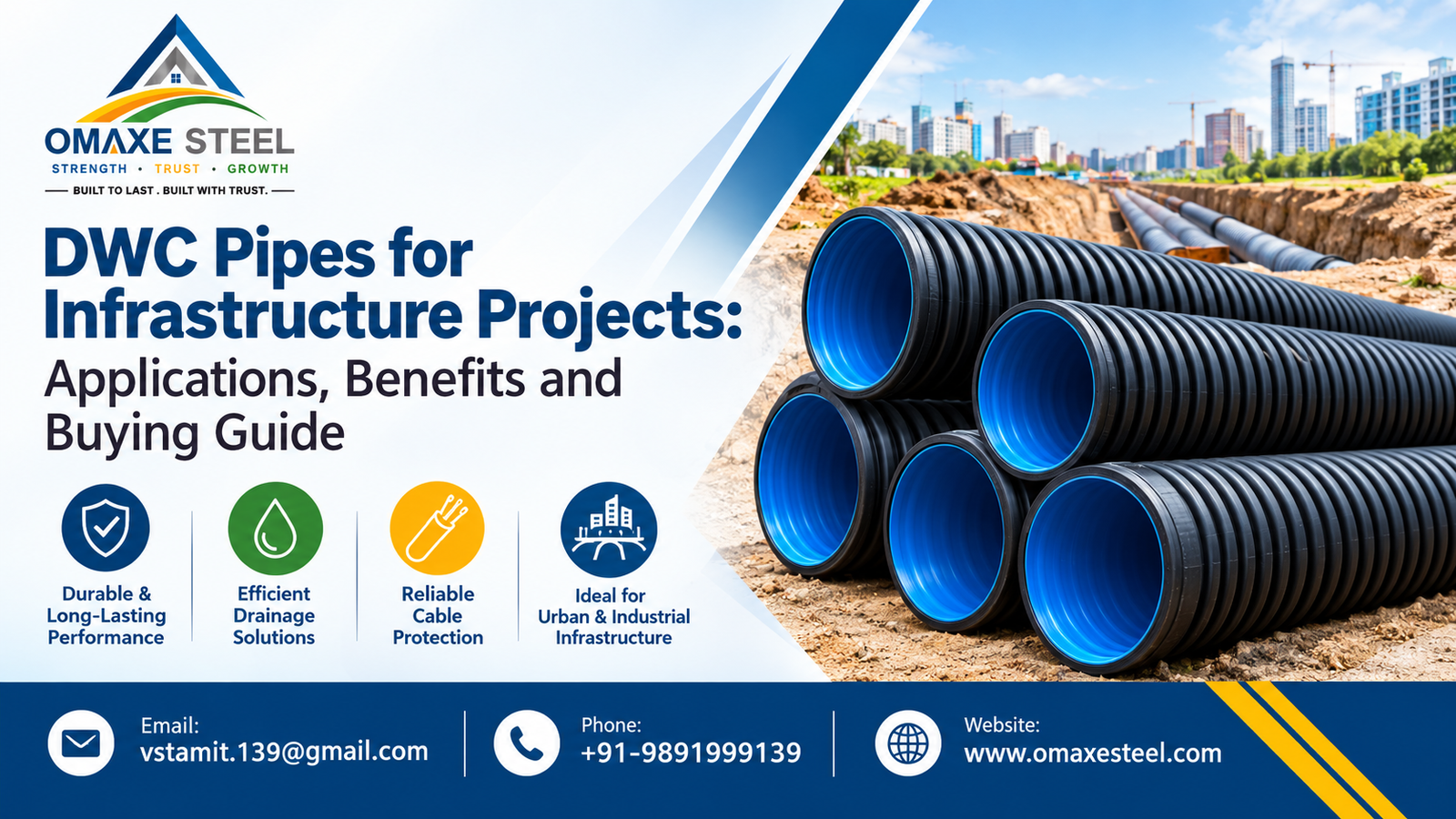
Underground infrastructure is the backbone of modern cities, industrial parks, and rural utility networks alike. Whether it’s carrying stormwater away from a housing colony, protecting a telecom fibre line running beneath a highway, or routing electrical cables through an industrial estate, the piping used below ground has to be tough, long-lasting, and easy to install. This is exactly where DWC pipes have become the material of choice for engineers, contractors, and utility planners across India. If you’re new to the term, or if you’re evaluating piping options for an upcoming project, this guide walks through what these pipes are, why they perform so well underground, and how to choose the right one for drainage or cable protection applications. What Are DWC Pipes? DWC stands for Double Wall Corrugated. As the name suggests, these pipes are manufactured with two distinct wall layers: An outer corrugated wall, which gives the pipe its ring stiffness and ability to resist external soil and traffic loads. An inner smooth wall, which allows water, cables, or wires to move through with minimal friction. This dual-wall design is what sets double wall corrugated pipes apart from traditional solid-wall pipes. The corrugations act almost like structural ribs, distributing load across the pipe’s circumference, while the smooth bore keeps hydraulic flow efficient or makes cable pulling straightforward during installation. Most DWC pipes used in India and similar markets are made from HDPE (High-Density Polyethylene), a thermoplastic material known for its durability and resistance to environmental stress. That’s why you’ll often see them referred to as HDPE. Key Benefits of DWC Pipes The popularity of DWC pipes in underground projects comes down to a combination of practical advantages: High ring stiffness – The corrugated design allows the pipe to bear substantial external loads from soil backfill and vehicular traffic without deforming. Lightweight construction – Compared to concrete or metal pipes of similar diameter, HDPE-based pipes are considerably lighter, which reduces handling effort on site. Impact resistance – HDPE material can absorb impact during transport, handling, and installation without cracking, which is particularly useful on busy construction sites. Corrosion and chemical resistance – Unlike metal pipes, DWC pipes do not rust or corrode when exposed to moisture, soil chemicals, or mildly acidic/alkaline conditions. Flexibility – The pipes can flex slightly to accommodate ground movement or minor installation misalignments, reducing the risk of joint failure. Smooth inner surface – This minimizes friction loss for fluids and reduces resistance during cable pulling operations. Easy transportation and installation – Being lightweight and available in coiled or straight lengths, these pipes are easier to transport and lay compared to rigid alternatives. Long service life – HDPE is a stable polymer that, when installed correctly, can serve reliably for several decades underground. Low maintenance requirements – Once buried and backfilled properly. Generally require minimal upkeep over their service life. Drainage Systems One of the most common uses of DWC pipes is in underground drainage solutions. These include: Stormwater drainage networks in townships and commercial complexes Sewage and wastewater carrier lines Agricultural field drainage Road-side drainage channels For drainage applications, DWC drainage pipes are typically selected based on expected flow volume, the diameter needed to handle peak discharge, and the ring stiffness (or SN class) required for the burial depth and traffic loading above the pipe. It’s worth noting that drainage performance depends heavily on correct installation — proper bedding material, adequate compaction of backfill, and appropriate slope (gradient) all play a role in ensuring the system functions as designed over its lifetime. Underground Cable Protection Beyond drainage and cable protection have become a standard specification across power, telecom, and infrastructure projects. Typical use cases include: Electrical Cable Ducting Utility companies and industrial facilities route HT/LT power cables through DWC ducts to protect them from soil movement, rodent damage, and accidental excavation strikes. Telecom Networks Telecom operators rely on underground cable ducts to lay and protect copper and fibre cables running between exchanges, towers, and last-mile connections. Optical Fibre / OFC Networks As fibre-to-the-home (FTTH) and broadband networks expand, OFC cables are frequently laid inside corrugated ducts to prevent physical damage and simplify future maintenance or cable replacement. Solar Power Cable Routing Solar power plants use DWC pipes to protect DC and AC cabling that runs between panel arrays, inverters, and substations, shielding them from sun exposure, rodents, and mechanical stress. Highway and Street-Lighting Projects Cable routing for street lighting, traffic signals, and highway monitoring systems commonly uses these pipes to keep wiring safe beneath road shoulders and medians. Other Applications The versatility of double wall corrugated pipes extends well beyond drainage and cabling: Roads and highways – Cross-drainage and cable-crossing applications beneath carriageways Railway and metro projects – Signal cable protection and drainage along tracks Smart-city infrastructure – Integrated utility corridors carrying multiple services Industrial projects – Cable and pipeline protection within factory premises Residential and commercial developments – Drainage and electrical routing within housing societies and complexes Municipal utility projects – Water supply auxiliary lines and public infrastructure works How to Choose the Right DWC Pipe Selecting the correct pipe for a project isn’t just about picking a diameter off a catalogue. A few practical factors to evaluate: Pipe diameter – Based on expected flow rate (drainage) or number and type of cables (cable protection) Number/type of cables – Determines whether single or multiple ducts are needed, and their internal clearance Drainage requirements – Peak flow, catchment area, and slope considerations Burial depth – Deeper installations generally require higher ring stiffness Soil conditions – Loose or unstable soils may need additional bedding and stiffer pipe classes Traffic loading – Roads and heavy-vehicle zones demand higher SN (stiffness) classes Required ring stiffness/SN class – Should match the project’s structural design specifications Project specifications – Municipal, telecom, or power utility standards may dictate specific pipe grades Quality and applicable standards – Compliance with relevant IS standards ensures consistent wall thickness and material quality Getting these details right at the planning stage helps avoid costly rework or




 Arabic
 French
 Spanish
 Portuguese
 Deutsch
 Turkish
 Dutch
Dutch
 Italiano
 Russian
 Romaian
 Portuguese (Brazil)
 Greek
Greek